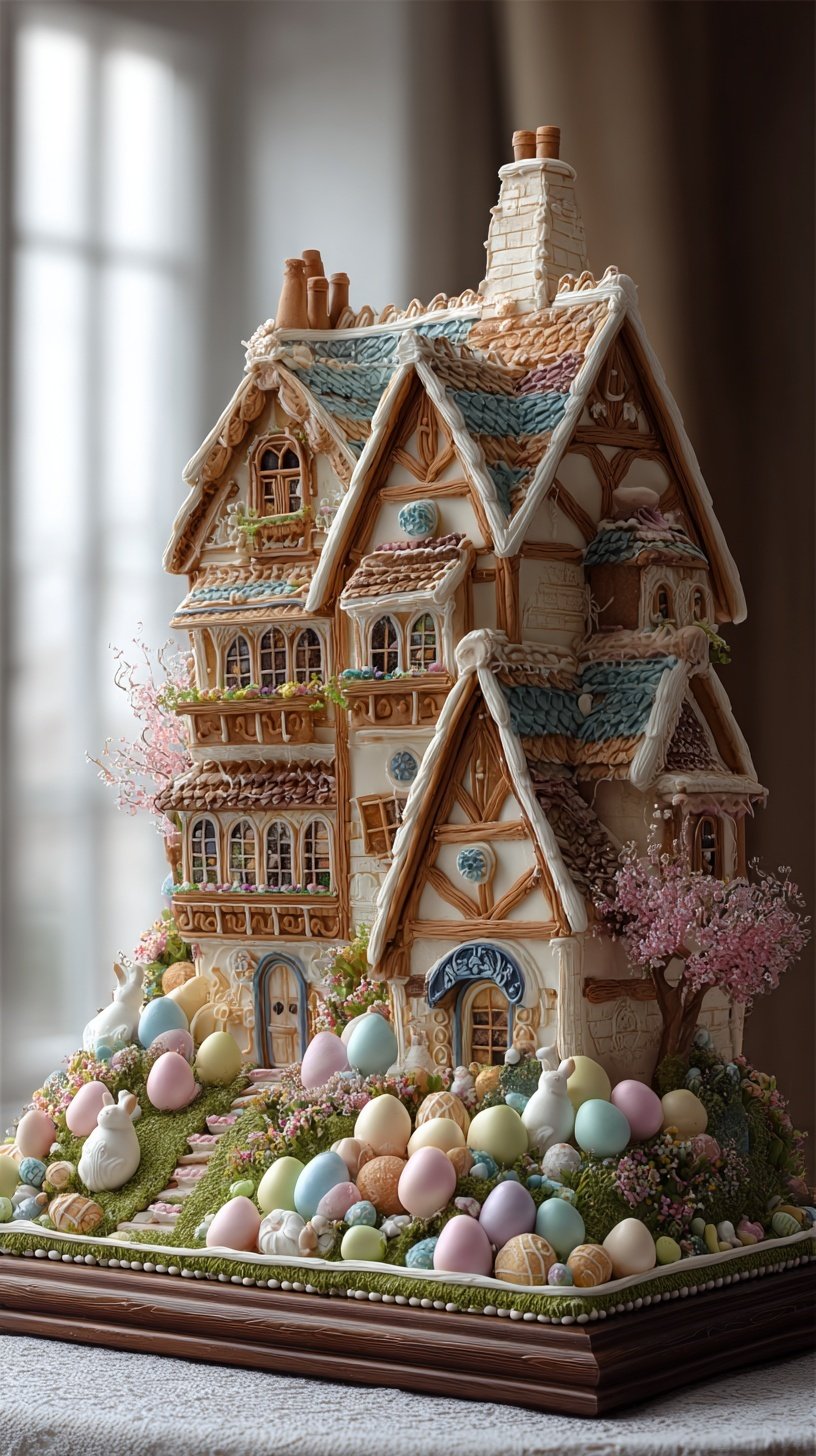
Spring is finally here and your kitchen is ready for some fun. This Easter gingerbread house is the perfect way to celebrate the season. It brings the whole family together for a sweet afternoon. You get a beautiful centerpiece that you can actually eat.
Why This Recipe Is a Winner
This project is a winner for your next spring gathering. It turns a winter classic into a bright holiday treat. Kids love the pastel colors and the candy eggs. It is completely edible and delicious too. You can make this a new yearly tradition. It adds a handmade touch to your Easter table.
Simple Method
Making this house is easier than it looks. You just mix, chill, and bake your panels. The dough is sturdy so it stays upright easily. Using royal icing as glue keeps everything secure. You don’t need to be an artist to succeed. Just take your time and enjoy the process.
Ingredients You’ll Need
Most of these items are likely in your pantry already. Grab some seasonal pastel candies to finish it off.
- 500g all-purpose flour
- 2 tsp ground ginger
- 1 tsp ground cinnamon
- 1/2 tsp ground cloves
- 175g unsalted butter, softened
- 175g light brown sugar
- 150g molasses or golden syrup
- 1 large egg
- 500g icing sugar
- 2 large egg whites
- 1 tsp lemon juice
- Pastel candy-coated chocolate eggs
- Assorted spring-colored sprinkles
- Shredded coconut dyed with green food coloring
Step-by-Step
- Sift together flour, ginger, cinnamon, and cloves in a large mixing bowl.
- Cream the softened butter and light brown sugar until light and fluffy, then beat in the egg and molasses.
- Gradually incorporate the dry ingredients into the wet mixture until a stiff dough forms.
- Wrap the dough in plastic wrap and refrigerate for at least 30 minutes to firm up.
- Preheat the oven to 180C (350F) and line baking sheets with parchment paper.
- Roll out the dough to a consistent 5mm thickness and cut out panels using templates: two side walls, two end walls, and two roof panels.
- Bake the panels for 12 to 15 minutes until firm and golden brown, then transfer to a wire rack to cool completely.
- Whisk the egg whites, icing sugar, and lemon juice until stiff, glossy peaks form to create the royal icing glue.
- Pipe royal icing along the vertical edges of the wall panels and assemble the base structure on a cake board, holding until set.
- Apply icing to the top angled edges of the walls and carefully attach the roof panels, securing them until the icing hardens.
- Decorate the exterior using remaining icing as adhesive for pastel candies, chocolate eggs, and sprinkles.
- Spread green-tinted coconut around the base to simulate spring grass and allow the structure to dry for 4 hours.
Best Ways to Enjoy It
Place this in the center of your dessert table. Surround it with extra chocolate eggs for a full scene. It looks lovely next to a vase of fresh tulips. When you are ready, let the kids break it apart. Serve pieces with a glass of cold milk.
Keep It Fresh
Keep your house in a cool, dry place. Humidity is the enemy of gingerbread structures. It will stay fresh for about two weeks. If you want to eat it, cover it loosely. Do not refrigerate the finished house as it gets soft. Keep it away from direct sunlight to protect the colors.
Tips for Best Results
- Don’t skip chilling the dough for at least 30 minutes.
- Avoid moving the house until the icing is completely dry.
- Use a sharp knife for clean edges on your panels.
- Make the icing thick enough to hold its shape.
- For Easter, use plenty of pastel candies for a soft look.
- Add a few drops of food coloring to the icing for variety.
- Ensure the panels are completely cool before you start building.
Ways to Switch It Up
- Swap molasses for honey for a lighter gingerbread color.
- Use gluten-free all-purpose flour for a friendly dietary option.
- Add edible flowers around the base for a garden feel.
Common Questions
Can I make the dough ahead of time?
Yes, you can make it two days early. Keep it wrapped tightly in the fridge. Let it sit at room temperature for 10 minutes before rolling.
How do I know when the panels are done?
The edges will look dark gold and feel firm. They will continue to harden as they cool. This Easter gingerbread house needs sturdy walls to stand up.
I hope this sweet project brings a little extra joy to your spring. It is such a fun way to get creative with your family. Happy baking and Happy Easter!
— Alex

Ingredients
- 500 g all -purpose flour
- 2 tsp ground ginger
- 1 tsp ground cinnamon
- 1/2 tsp ground cloves
- 175 g unsalted butter, softened
- 175 g light brown sugar
- 150 g molasses or golden syrup
- 1 large eg g
- 500 g icing sugar
- 2 large egg whites
- 1 tsp lemon juice
- Pastel candy -coated chocolate eggs
- Assorted spring -colored sprinkles
- Shredded coconut dyed with green food coloring
Instructions
- Sift together flour, ginger, cinnamon, and cloves in a large mixing bowl.
- Cream the softened butter and light brown sugar until light and fluffy, then beat in the egg and molasses.
- Gradually incorporate the dry ingredients into the wet mixture until a stiff dough forms.
- Wrap the dough in plastic wrap and refrigerate for at least 30 minutes to firm up.
- Preheat the oven to 180C (350F) and line baking sheets with parchment paper.
- Roll out the dough to a consistent 5mm thickness and cut out panels using templates: two side walls, two end walls, and two roof panels.
- Bake the panels for 12 to 15 minutes until firm and golden brown, then transfer to a wire rack to cool completely.
- Whisk the egg whites, icing sugar, and lemon juice until stiff, glossy peaks form to create the royal icing glue.
- Pipe royal icing along the vertical edges of the wall panels and assemble the base structure on a cake board, holding until set.
- Apply icing to the top angled edges of the walls and carefully attach the roof panels, securing them until the icing hardens.
- Decorate the exterior using remaining icing as adhesive for pastel candies, chocolate eggs, and sprinkles.
- Spread green-tinted coconut around the base to simulate spring grass and allow the structure to dry for 4 hours.